


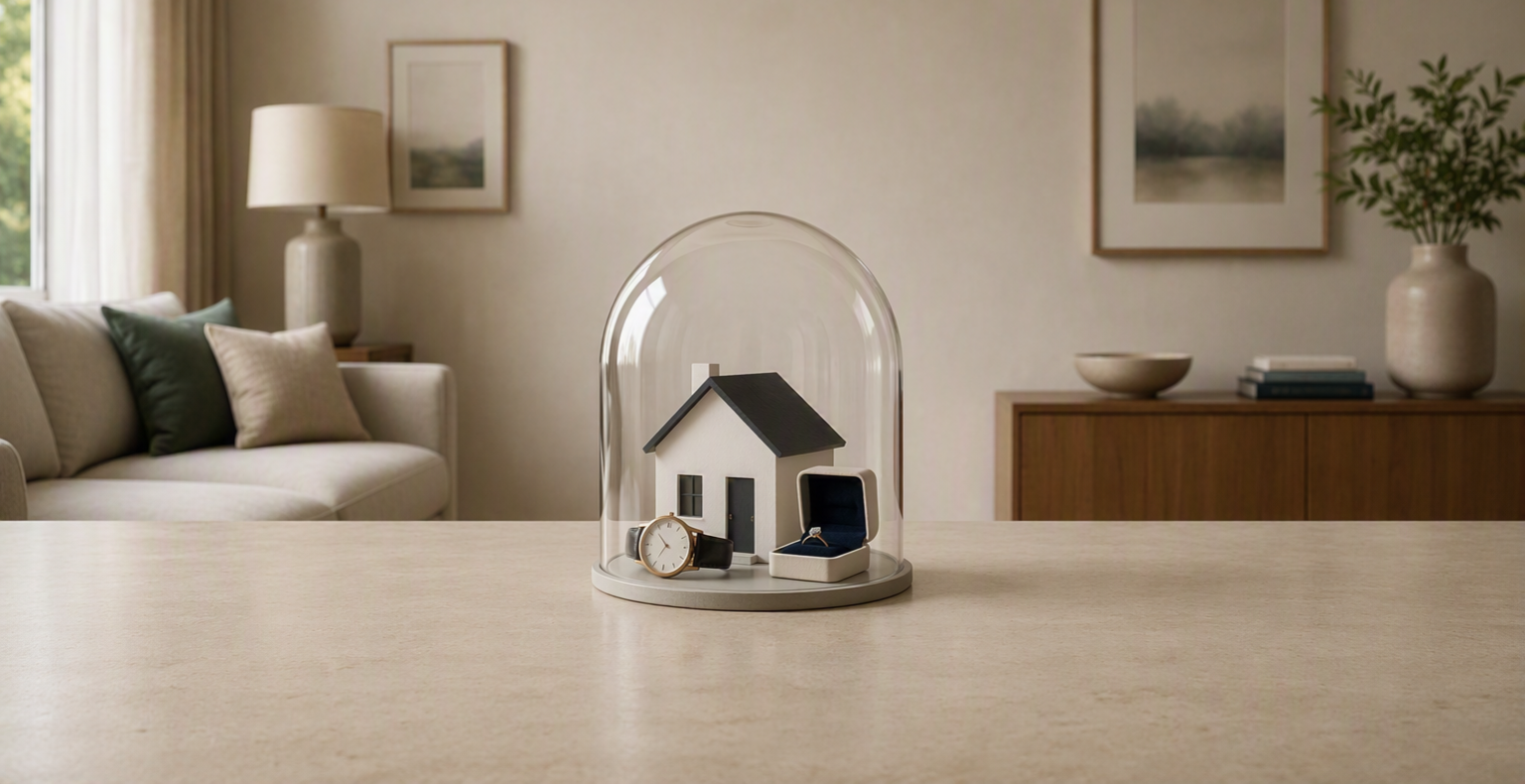
Your home is filled with items that hold both sentimental and monetary value. From treasured family photos to a favorite chair, these are the items that make your house a home. But did you know that not everything of value is covered by your regular homeowners insurance policy?
While many items are covered, there are certain valuables that may require additional insurance coverage, sometimes in the form of a rider or floater. To make sure you’re insured for all the things that matter most, it’s important to review your insurance policy carefully with your financial advisor or insurance agent and take any necessary steps to address gaps in coverage.
What Is Typically Covered Under a Homeowners Insurance Policy?
A standard homeowners insurance policy generally covers damage to your home and personal belongings. Coverage limits apply, and these limits vary by policy, so it’s important to confirm the details with your insurance provider.
Everyday household items that are not particularly high-end or expensive and that can be easily replaced are typically covered. Examples often include:
- Books
- Regular electronics
- Appliances
- Office supplies
- Toys
- Holiday decorations
Items That Might Require Additional Coverage
For belongings that are considered rare or expensive, additional insurance coverage may be necessary. This is often done through a rider, floater, or endorsement. An endorsement is an add-on to your policy that comes at an additional cost but provides expanded coverage for higher-value items.
Items that commonly require this type of coverage include:
- Antique or expensive furniture
- High-end electronics
- Fine jewelry
- Sterling silver
- Art collections
- Certain family heirlooms
Conducting a Home Inventory
It’s important to take the time to conduct a home inventory of your personal belongings. A detailed inventory can be extremely helpful—and sometimes necessary—if items are damaged, lost, or stolen.
To get started, divide your belongings into three categories:
- Items that are not worth insuring
- Items covered by your standard homeowners insurance policy
- Valuables that require additional coverage
For high-value items, it’s important to know their estimated value. In many cases, this means hiring a licensed appraiser to document the value of items such as jewelry, antiques, or art collections. Avoid relying on general online appraisal tools, as these typically are not accepted by insurance companies as proof of value.
How to Document Your Valuables
There are several effective ways to document your valuables. In most cases, using more than one method can help ensure that your insurance claim is processed accurately and efficiently.
- Method #1: Video – Record a video of your belongings while verbally describing each item and its estimated value. Be sure to include items stored in places such as garages or basements.
- Method #2: Photos – Take clear photos of each valuable item. You can print the photos and note the item description and estimated value on the back, or store this information digitally.
- Method #3: Purchasing Information – Create a list of serial and model numbers for valuable items, ideally in a spreadsheet you can share with your insurance agent. Keep receipts for high-value purchases by scanning and saving them in a backed-up digital file.
Store physical copies of documentation in a fireproof safe or a safety deposit box located away from your home. For digital records, home inventory apps and secure cloud storage can help you organize and protect this information.
Being prepared with the right insurance coverage can make a difficult situation far more manageable. With adequate protection in place and a thorough home inventory, you’ll be better positioned to recover financially if damage or theft occurs.